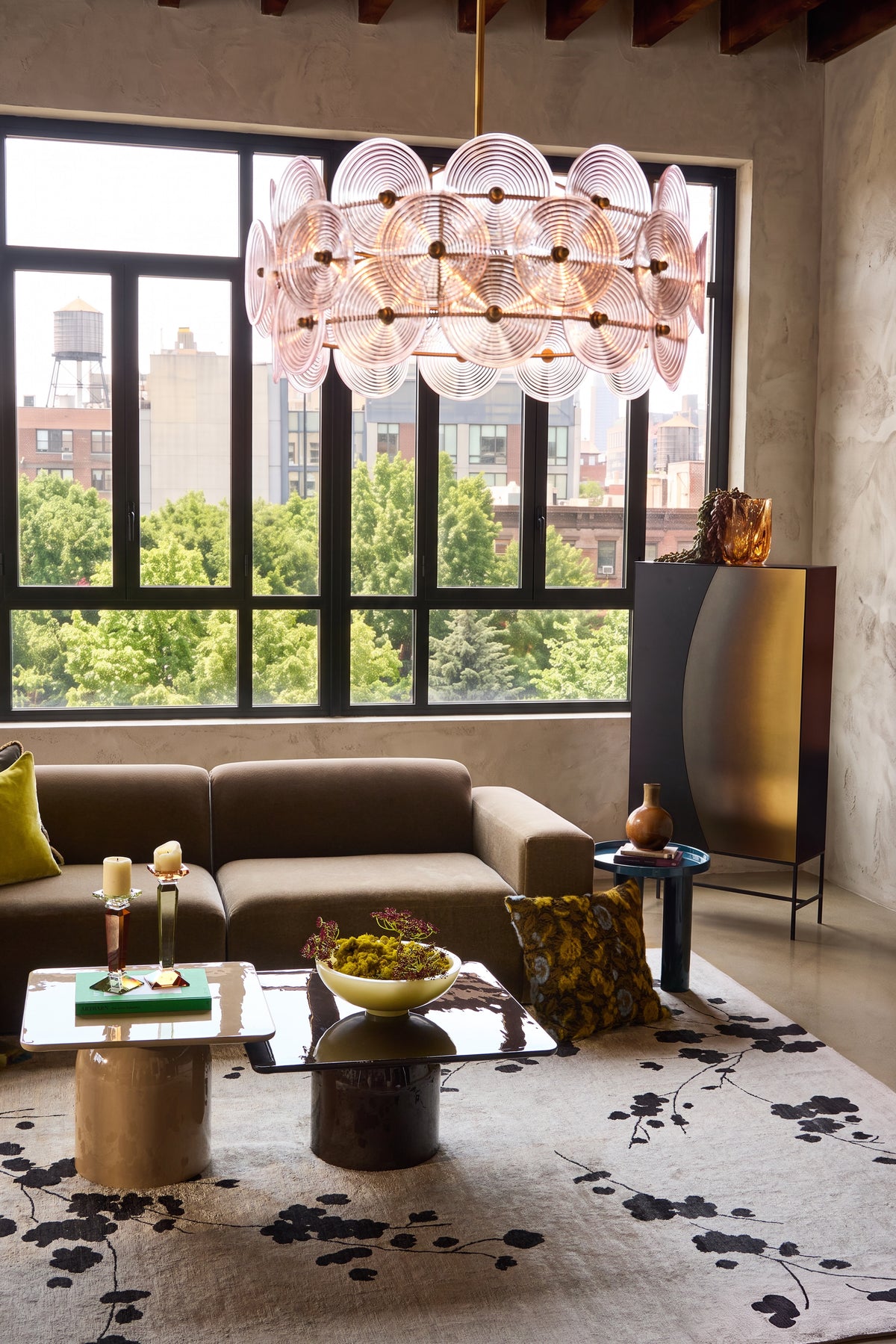


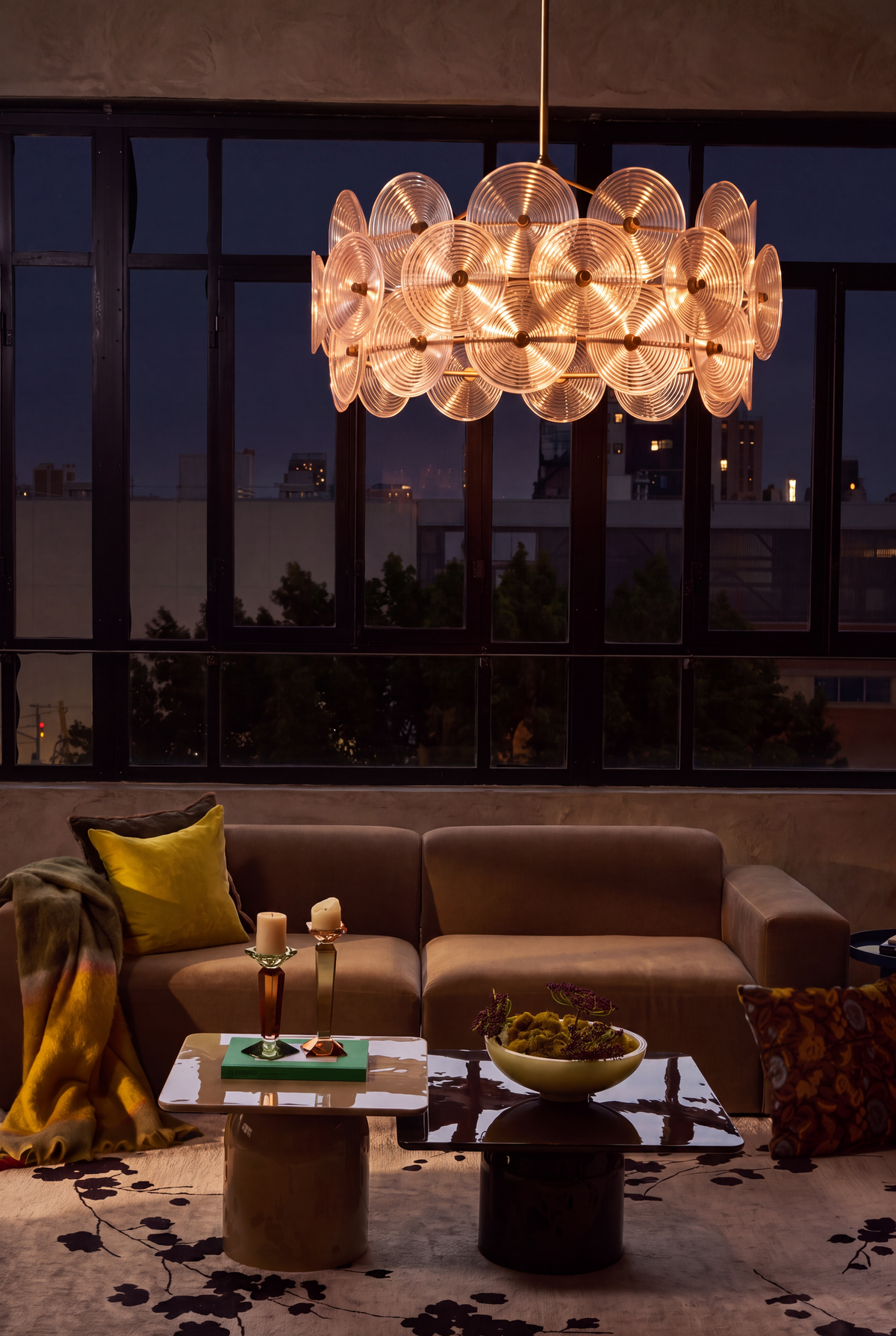







We speak of lighting as though it were simply a matter of brightness — of whether one can see clearly enough to read or cook or navigate a room at night. But light does far more than illuminate. It defines mood, draws attention, creates warmth, establishes depth. A room lit from a single source flattens everything within it; a room lit in layers reveals the full beauty of what it holds.
This is the philosophy behind layered lighting — not one light but many, each playing a different role, together composing something more generous than any single fixture could offer. Any thoughtful layered lighting guide begins with this understanding: atmosphere is created gradually, through contrast and balance rather than sheer brightness alone.

The Three Layers
Ambient lighting is the foundation: the general illumination of a room, the base level of light that allows movement and use. It often comes from ceiling fixtures or large floor lamps, and its quality — warm or cool, soft or sharp — sets the emotional register of the entire space.
Task lighting is functional and focused. It serves specific activities: reading, cooking, writing, applying makeup. A desk lamp, a bedside lamp, an under-cabinet light in the kitchen — each places light exactly where work happens, reducing eye strain and supporting precision without flooding the entire room with brightness.
Accent lighting is where creativity lives. A small spotlight trained on a piece of art, a wall sconce that washes light across textured plaster, a plug-in light tucked behind a plant — accent lighting reveals depth and dimension, introduces shadow, makes a room feel inhabited rather than merely occupied.
Together, these layers form the language of ambient task accent lighting — each type supporting the others, each incomplete on its own. Understanding ambient vs task vs accent lighting explained in practical terms is ultimately about understanding how people move through a room and how different moods are created throughout the day.

The Living Room: Flexibility Above All
Living rooms ask the most of their lighting because they are asked to serve so many different moods. The same room might host a dinner party, a Sunday afternoon of reading, and a late-night film. Relying on a single overhead fixture for all three occasions is a kind of impoverishment. Layer instead: a floor lamp beside the sofa for reading, table lamps on side surfaces for warmth, accent lighting to animate the objects and surfaces you love.
For anyone wondering how to light a living room beautifully, the answer lies less in brightness than in variety — different sources at different heights creating rhythm and softness throughout the space.
In rooms without overhead lighting at all, this layered approach becomes a gift rather than a workaround — multiple lower sources of warm light create an intimacy that a central ceiling fixture rarely achieves. Learning how to layer lighting in a living room without overhead light often results in rooms that feel more nuanced and welcoming than those relying on a single ceiling fixture.
The question of how many light sources per room is less mathematical than atmospheric, though most rooms benefit from at least three distinct points of light to avoid visual flatness.

Layered Lighting Ideas for Every Room
In the bedroom, the goal is a gentle transition from wakefulness to rest. Bedside lamps with warm bulbs and adjustable brightness serve this beautifully, their intimate circle of light making the rest of the room feel softly recessive. In the dining room, a single pendant or chandelier centered over the table creates the ceremonial gathering space that a meal deserves — keep the surrounding light subtle so the table glows. In the home office, task lighting is paramount: adjustable, directional, positioned to eliminate glare from screens.

Lighting as Object
The fixtures themselves deserve as much attention as the light they produce. Sculptural floor lamps, pendants of blown glass or woven fiber, table lamps with bases of ceramic or stone — these are objects that earn their place in a room even when switched off. The most considered interiors treat light fixtures as they would any other beautiful thing: chosen with care, placed with intention, allowed to participate in the composition of the room.
The growing interest in sculptural lighting trends 2025 reflects this shift toward lighting as both utility and art — fixtures that shape the atmosphere of a room even before they are illuminated.
Many contemporary statement lighting ideas for living rooms 2025 embrace this duality, combining dramatic form with warm, layered functionality that makes spaces feel expressive yet deeply livable.
Understanding how to use lighting to make a room feel cozy often comes down to restraint: warmer bulbs, layered pools of light, and illumination that invites lingering rather than simply exposing every corner.
Light, in the end, is not a utility. It is a material — one of the most responsive and transformative available to us. Learn to layer it, and every room you inhabit becomes richer for it.
