
Understanding what your jewelry is made of
Every piece of fine jewelry begins with a base metal—the foundation that determines color, weight, durability, and how the item ages over time.
Gold is never worn in its purest state—it's alloyed with other metals for strength, thereby producing the material’s distinct yellow, white, rose, and green hues. Silver and platinum each bring their own weight, tone, and upkeep to a piece.


The stones that give each piece its character
From the classic brilliance of a diamond to the storied color of a sapphire or tourmaline, the gemstone is often what draws you to a piece first. Here's what's worth knowing before you buy.
No two stones read quite the same way — the same cut of diamond can look colder or warmer depending on its grading, and the same species of gemstone can vary widely in tone, clarity, and rarity. A little background makes it easier to know what you're actually looking at.
What Makes a Stone Worth Choosing
The grading language behind every diamond and gemstone — so you know exactly what you're paying for, and why.
Lab-Grown Diamonds
- Chemically & optically identical to natural
- Grown in weeks, not billions of years
- Typically 30–40% lower cost per carat
- Traceable, controlled origin
Natural Diamonds
- Formed over one to three billion years
- Each stone geologically one of a kind
- Historically stronger resale value
- Requires certified origin sourcing
The 4 C's of Diamond Quality
The four factors that determine a diamond's quality and price, whether it's lab-grown or natural.
Cut
The single biggest factor in a diamond's sparkle. A well-proportioned cut directs light back through the top of the stone; too shallow or too deep and light leaks out the sides or bottom.
Color
Graded D (colorless) to Z (light yellow or brown). Near-colorless grades (G–J) offer strong value, since the difference is nearly invisible once a stone is set.
Clarity
Measures internal inclusions and surface blemishes, from Flawless to Included. Most inclusions are invisible to the naked eye at VS (Very Slightly Included) and above.
Carat
A unit of weight, not size — 1 carat equals 0.2 grams. Two diamonds of equal carat weight can look different in size depending on how they're cut.
Colored Gemstones & Birthstones
Beyond diamonds — stones chosen for durability, meaning, or tradition.
Colored Gemstones
Sapphires and rubies rank 9 on the Mohs hardness scale and wear well daily. Emeralds and opals are softer and more included by nature — beautiful, but better suited to occasional wear.
Birthstones
Each month is paired with a gemstone rooted in centuries-old tradition — a meaningful way to personalize a gift.
abcVintage: Jewels With Stories to Tell
Curated from around the world, our abcVintage collection features hand-sourced pieces from renowned jewelry houses including Cartier, Mauboussin, and Tiffany & Co. — each with a history of its own era.

CIRCA 1880s · $13,500
Victorian Bypass Bangle
Garnet, diamond & opal floral bypass bangle — a nineteenth-century piece designed in the elegant bypass style.

CIRCA 1970s · $20,000
Nephrite Diamond Ring
Designed by Donald Claflin for Tiffany & Co. — green nephrite set in 18K yellow gold, edged with a sweeping curve of diamonds.

CIRCA 1970s · $16,500
Italian Link Bracelet
18K yellow gold, designed in Italy by renowned jeweler UNOAERRE — 63.5 grams of substantial, look-at-me luxury.
How a stone is held changes how it wears
The setting affects everything from how much light a stone catches to how safely it's protected in daily wear.

MOST COMMON
Prong
Metal claws lift the stone up to maximize light and brilliance.

MOST SECURE
Bezel
A metal rim wraps the stone's edge for everyday protection.

MOST BRILLIANT
Pavé
Small stones set edge to edge for a continuous field of sparkle.

MOST MODERN
Bar & Channel
Stones sit flush between two metal bars for a sleek, low profile.
Getting the fit right
A few minutes with a ring sizer or soft measuring tape saves a resize down the line.

Ring Sizing
Measure an existing ring's inside diameter, or visit an abc jewelry specialist in-store for a professional fitting.

Earring Scale
Studs for everyday wear, huggies for a subtle statement, drops for evening occasions.

Bracelet & Cuff Sizing
Measure your wrist snugly, then add half an inch for a comfortable, natural drape.

Necklace Length
16" sits at the collarbone, 18" at the neckline, 24"+ falls closer to the chest for layering.
Cleaning & Care
Keep every piece looking as it did the day you found it
GOLD & SILVER
Everyday Metals
Warm water, mild soap, and a soft cloth. Avoid chlorine and household cleaners, which can pit or discolor metal over time.
DIAMONDS
Diamonds & Hard Gems
Soak briefly in warm soapy water, brush gently with a soft toothbrush, and rinse thoroughly before drying.
SOFT STONES
Opals, Pearls & Emeralds
Wipe with a barely damp cloth only — never soak. Put these pieces on last, after perfume and lotion.
VINTAGE
Antique & Heirloom Pieces
Skip home cleaning entirely — bring vintage pieces to an abc jewelry specialist for gentle, professional care.
Services
We're here beyond the purchase
By Appointment
Book a Jewelry Appointment
Meet with an abc jewelry specialist in-store or by FaceTime to try pieces on, ask questions, and see new and exclusive collections.
In-Store
Visit Us In-Store
See the abcVintage collection and full jewelry assortment in person at our New York City flagship.
Meet the Makers
Shop by Designer
Discover the artisans and jewelry houses behind each collection
Frequently Asked Questions
Difference between green, rose, white, and yellow gold
Gold has long held its value, making it a timeless investment. It helps preserve wealth, offers protection during market uncertainty, and can be enjoyed as beautiful jewelry while retaining lasting value.
Difference between sterling silver, white gold, and platinum
Sterling silver, white gold, and platinum can look similar but differ in composition, durability, and upkeep — platinum is the most durable and hypoallergenic of the three.
What diamond clarity means
Clarity measures internal inclusions and surface blemishes, graded from Flawless to Included. Most inclusions are invisible to the naked eye at VS and above.
Difference between natural vs. synthetic gemstones and abc's policy on selling synthetic
Natural gemstones form over millions of years, while synthetic stones are lab-created with the same chemical makeup. abc discloses the origin of every stone we sell.
Difference between "vintage" and "antique"
Vintage pieces are generally 20-99 years old, while antique pieces are 100 years or older.
How to care for your vintage and antique jewelry
Skip home cleaning entirely — bring vintage and antique pieces to an abc jewelry specialist for gentle, professional care.
What to look for with prong-set stones
Check that prongs are snug against the stone with no visible gaps, and have loose prongs re-tightened by a jeweler to prevent losing the stone.

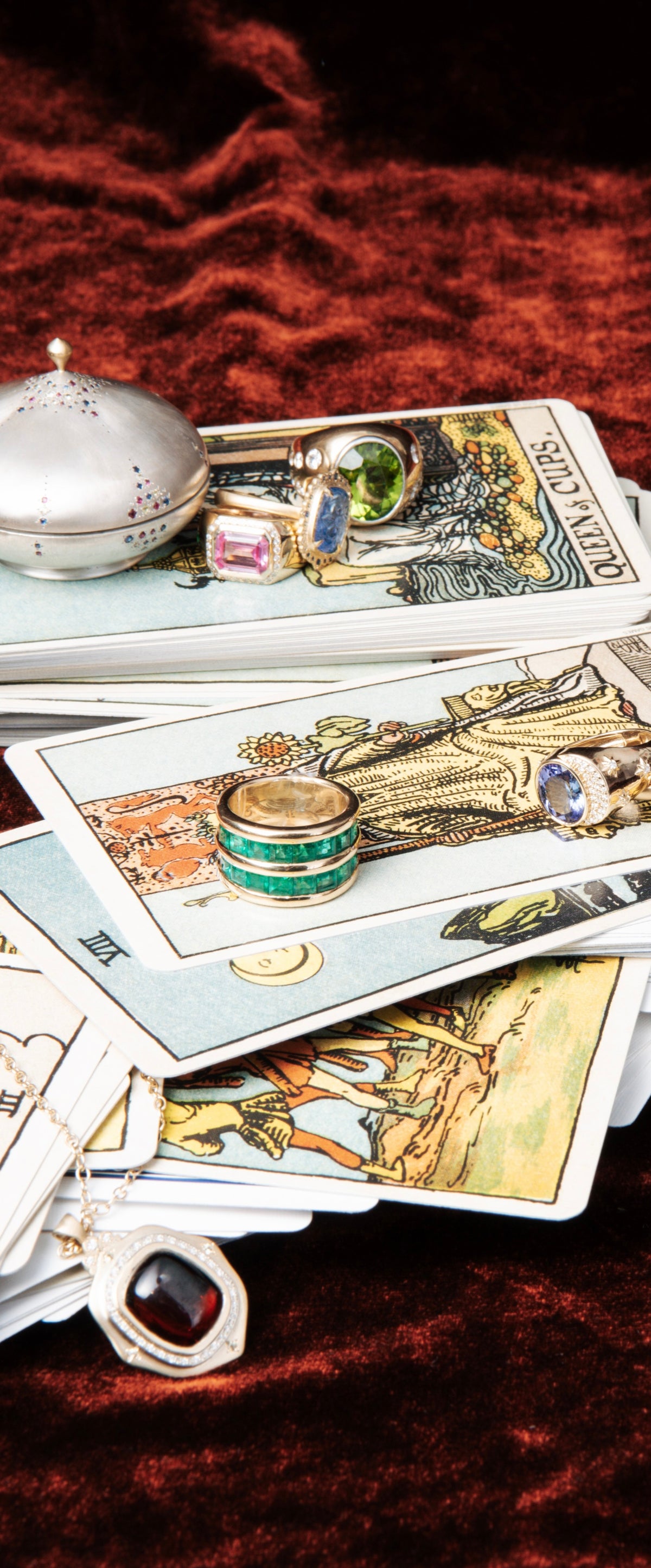
Uncover Gems That Whisper Tales of Enchantment
From rare vintage jewels to one-of-a-kind artisanal treasures, our curated jewelry collection is designed to be coveted.